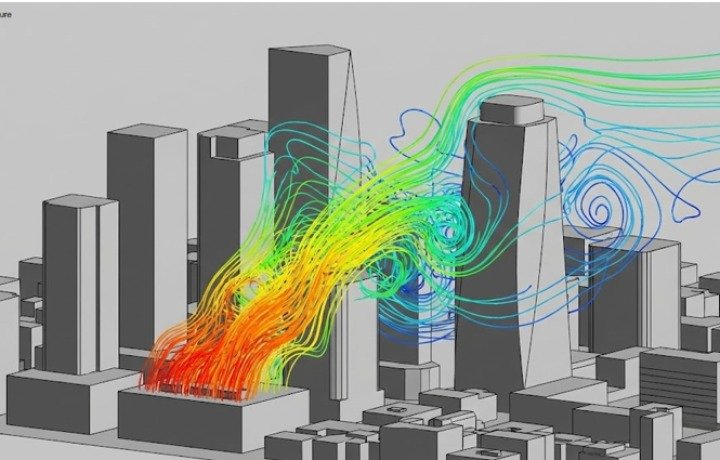
Modern engineering projects require reliable analysis to ensure effective ventilation, manage fire-related risks, and maintain safe environments for building occupants. Computational Fluid Dynamics (CFD) modelling has become an important engineering tool for evaluating airflow, temperature distribution, pressure conditions, and smoke movement in complex structures. From commercial buildings and underground parking facilities to transportation tunnels, CFD simulations provide valuable insights that support better engineering decisions.
Professional CFD analysis allows engineers to investigate different operating conditions, identify potential design weaknesses, and evaluate the performance of proposed safety systems. With accurate modelling and technical expertise, project teams can develop ventilation and fire protection strategies that meet specific project requirements.
Enhancing Ventilation Performance Through HVAC CFD
Effective ventilation is essential for maintaining comfortable indoor environments and appropriate air quality. HVAC CFD simulations help engineers understand how air moves throughout a building and how heating, ventilation, and air conditioning systems perform under different operating conditions.
These simulations evaluate airflow velocity, temperature distribution, pressure differences, and ventilation effectiveness. Engineers can identify stagnant areas, investigate uneven air distribution, and optimize diffuser placement to achieve better ventilation performance.
CFD modelling can also support energy-efficient building designs by identifying opportunities to improve air distribution and reduce unnecessary system resistance. Whether applied to offices, commercial buildings, industrial facilities, or large public spaces, detailed HVAC simulations contribute to informed design decisions.
Tunnel CFD for Infrastructure Safety
Transportation tunnels require carefully designed ventilation systems because their enclosed environments create unique challenges during normal operation and emergency situations. Tunnel CFD analysis helps engineers investigate airflow patterns, ventilation effectiveness, and smoke movement within underground infrastructure.
An important application of this analysis is Tunnel Fire safety. During a tunnel fire, heat and smoke can spread rapidly and affect visibility, evacuation conditions, and emergency response activities.
CFD simulations allow engineers to examine different fire scenarios, evaluate ventilation strategies, and understand how smoke behaves under various operating conditions. These investigations can support the assessment of longitudinal ventilation, mechanical extraction, and other smoke management approaches.
Improving Emergency Evacuation with Egress CFD
Emergency escape routes must remain as safe as reasonably practicable during fire incidents. Egress CFD analysis helps engineers understand environmental conditions along designated evacuation pathways.
The simulations can evaluate smoke distribution, temperature development, visibility, and airflow conditions in corridors, lobbies, staircases, and other protected spaces.
By identifying areas where smoke may accumulate or evacuation conditions may deteriorate, engineers can investigate potential improvements to building layouts and smoke management systems. Combining CFD results with evacuation assessments provides a more comprehensive understanding of emergency planning and occupant safety.
Understanding Fire Development Through Fire CFD and Smoke CFD
Fire safety engineering depends on understanding how fires develop and how their effects influence surrounding spaces. Fire CFD modelling provides detailed information about heat release, temperature distribution, combustion-related processes, and airflow interactions.
Engineers can investigate different fire scenarios and assess how building geometry, ventilation arrangements, and fire protection measures influence the predicted conditions.
Similarly, Smoke CFD analysis focuses on smoke propagation, accumulation, and movement throughout enclosed environments. These simulations help evaluate mechanical smoke extraction, natural ventilation, and smoke containment arrangements.
The results can support the development of effective smoke management strategies and provide useful information for fire safety design reviews.
Advanced Car Park Fire Modelling
Underground parking facilities require specialized fire safety considerations because vehicle fires can generate substantial heat and smoke. Car park fire modelling helps engineers investigate potential fire scenarios and assess their effects on parking areas and connected spaces.
Simulations can examine temperature distribution, smoke movement, ventilation performance, and the effectiveness of extraction arrangements.
Detailed car park smoke modelling provides further insight into smoke accumulation, visibility conditions, and potential migration through parking structures. Engineers can use the findings to evaluate extraction points, ventilation rates, and alternative system configurations.
Professional car park cfd analysis also helps investigate airflow distribution under different operating conditions. This information supports the development of suitable ventilation strategies and can assist with identifying areas that require design improvements.
Stair Pressurisation Modelling for Smoke Protection
Protected staircases are essential components of building evacuation strategies. Pressurisation systems are commonly designed to help limit smoke infiltration into designated escape routes.
stair pressurisation modelling helps engineers assess pressure distribution and airflow performance throughout protected stairwells. Important considerations include door opening conditions, leakage paths, air supply rates, and pressure differences between connected spaces.
Advanced stair pressurisation cfd simulations provide detailed information about airflow behavior and system performance. Engineers can investigate different operating scenarios to understand how changes in building conditions may influence pressurisation effectiveness.
Additionally, stair pressurisation network modelling helps evaluate pressure relationships across interconnected spaces, including staircases, corridors, lobbies, and adjoining areas. This approach provides valuable information for assessing overall system behavior.
Car Park CO Modelling for Healthy Indoor Environments
Carbon monoxide is an important consideration in enclosed parking facilities because vehicle emissions can contribute to poor indoor air quality.
car park CO modelling helps engineers investigate how carbon monoxide concentrations may vary across parking areas under different traffic and ventilation conditions.
The simulations can identify potential accumulation zones and assess whether proposed ventilation arrangements provide suitable air movement. Engineers can also investigate extraction strategies and ventilation control approaches to support effective indoor air quality management.
Professional CFD Analysis for Better Engineering Decisions
Successful CFD projects require suitable modelling methodologies, reliable input data, appropriate boundary conditions, and careful interpretation of simulation results. Every building and infrastructure project has different requirements, making technical expertise essential for meaningful analysis.
lavaconsultants provides engineering support for ventilation assessment, fire safety analysis, smoke management, and complex CFD applications. Its services support project teams seeking to understand system performance and evaluate engineering design solutions.
From building ventilation studies to tunnel fire simulations and underground car park assessments, lavaconsultants focuses on delivering technical insights that support informed engineering decisions.
Investing in professional CFD modelling helps project stakeholders understand complex airflow and fire scenarios, evaluate design alternatives, and develop effective safety strategies. Accurate simulations combined with sound engineering judgment can contribute to safer buildings, improved ventilation performance, and more resilient infrastructure.
Congrats! You’ve Finished This Blog.