The medical industry requires high-quality surgical products to support modern healthcare practices and ensure reliable surgical procedures. Among these essential products, surgical sutures play a significant role in wound closure, tissue approximation, and supporting the natural healing process. As healthcare facilities continue to adopt advanced surgical techniques, the demand for dependable sutures is increasing. Hospitals, surgeons, and medical distributors therefore look for an experienced Suture manufacturer in india that understands the importance of manufacturing consistency, product quality, and reliable medical supplies.
Surgical sutures are manufactured using different natural and synthetic materials. Each material has unique properties related to tensile strength, flexibility, absorption time, and tissue compatibility. Selecting the appropriate suture depends on the surgical procedure, tissue characteristics, wound location, and expected healing duration.
Understanding the Role of Surgical Sutures
Surgical sutures are medical devices used to hold tissues together after surgical procedures or injuries. They help maintain wound closure until sufficient healing has occurred. Based on their composition and absorption characteristics, sutures are classified into absorbable and non-absorbable categories.
Absorbable sutures gradually break down within the body, while non-absorbable sutures provide extended mechanical support. Both types are important in general surgery, cardiovascular surgery, gynecology, plastic surgery, and other medical specialties.
Different Types of Surgical Sutures and Their Applications
1. Polypropylene Suture
Polypropylene Suture is a synthetic, non-absorbable monofilament surgical material known for its strength, flexibility, and low tissue reactivity. Its smooth surface helps reduce friction during tissue passage, making it suitable for procedures requiring precise wound closure.
It is widely used in cardiovascular surgery, general surgery, plastic surgery, and skin closure. Its resistance to degradation makes it appropriate for applications requiring long-term mechanical support. Different sizes and needle configurations allow surgeons to select products according to procedural requirements.
2. Polyamide Suture
Polyamide Suture is a synthetic, non-absorbable material generally manufactured using nylon-based polymers. It is valued for its flexibility, tensile strength, and convenient handling properties.
This material is frequently used in dermatological procedures, plastic surgery, and external wound closure. Its handling characteristics support controlled tissue approximation and appropriate knot placement. The selection of a suitable size depends on the nature of the procedure and tissue requirements.
3. Chromic catgut suture
Chromic catgut suture is a natural absorbable surgical material treated with chromium salts to modify its absorption characteristics. It provides temporary wound support while gradually undergoing enzymatic degradation within the body.
It is used in selected general surgical, gynecological, and soft-tissue procedures. Its absorption profile may vary depending on tissue conditions, patient factors, and the surgical application. Medical professionals consider these characteristics when determining its suitability.
4. Polypropylene mesh
Polypropylene mesh is a synthetic, non-absorbable medical implant material used in selected surgical procedures requiring tissue reinforcement. It is particularly associated with hernia repair and certain soft-tissue reconstruction applications.
Its durable structure provides mechanical support and allows tissue integration. Different designs and configurations are developed to address specific clinical requirements. Proper product selection and implantation techniques are important for appropriate clinical use.
5. Polydioxanone suture
Polydioxanone suture is a synthetic, absorbable monofilament material designed to provide extended wound support. Its gradual absorption characteristics make it useful for procedures where tissues require additional time to heal.
It is commonly considered in general surgery, pediatric surgery, and selected soft-tissue procedures. Its monofilament construction supports smooth tissue passage and offers convenient handling characteristics during surgical applications.
6. Polyglactin 910 Suture
Polyglactin 910 Suture is a synthetic, absorbable, braided surgical material widely used for tissue approximation and ligation. It offers flexibility, convenient handling, and dependable knot security when applied correctly.
It is frequently used in general surgery, gynecology, and other soft-tissue procedures. Its absorption characteristics make it suitable for applications where permanent suture retention is unnecessary.
7. Plain catgut suture
Plain catgut suture is a natural absorbable surgical material designed to provide temporary tissue support. It gradually breaks down through enzymatic processes within the body and generally has a shorter absorption period than chromic-treated catgut.
It may be considered for selected procedures involving tissues that heal relatively quickly. Surgeons evaluate its absorption characteristics, tissue response, and intended clinical application before selecting this material.
Importance of Quality Standards in Surgical Manufacturing
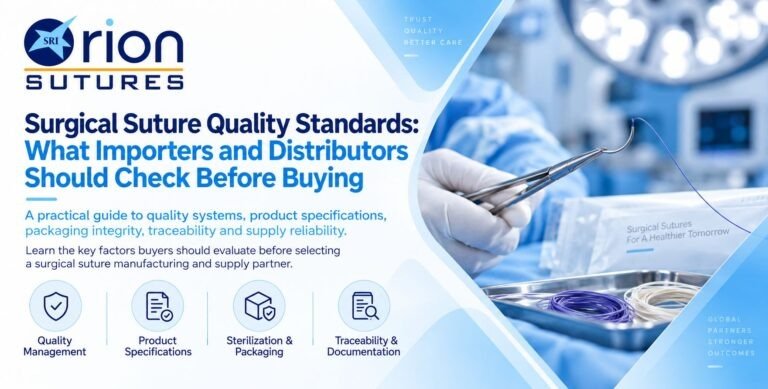
Quality assurance is a fundamental aspect of surgical suture manufacturing. Every product should meet its specified requirements for tensile strength, diameter consistency, flexibility, needle attachment, and packaging integrity.
Manufacturers should follow controlled production procedures, appropriate raw material selection, validated sterilization processes, and systematic quality inspections. Regulatory compliance, product traceability, and accurate technical documentation also contribute to dependable medical product standards.
orionsutures operates in the surgical suture industry, where product consistency, manufacturing practices, and quality assurance remain important considerations for healthcare businesses.
Choosing a Dependable Surgical Suture Supplier
Healthcare institutions and medical distributors should evaluate manufacturers according to their product portfolio, manufacturing capabilities, quality management systems, regulatory documentation, and customer support. Reviewing technical specifications helps ensure that selected products are appropriate for their intended applications.
Reliable suppliers should also maintain suitable packaging standards and provide information about sterilization, storage, and product handling.
Conclusion
Surgical sutures are essential components of modern healthcare, supporting wound closure and tissue approximation across multiple medical specialties. From Polypropylene Suture and Polyamide Suture to Chromic catgut suture, Polydioxanone suture, and Polyglactin 910 Suture, every material offers specific characteristics for different clinical applications. Plain catgut suture and Polypropylene mesh also serve important roles in selected surgical procedures.
Partnering with an experienced Suture manufacturer in india can help healthcare organizations maintain dependable procurement practices and access suitable surgical products. orionsutures represents the importance of quality-focused participation in this specialized medical industry, where consistency, reliability, and professional manufacturing standards remain essential priorities.
Congrats! You’ve Finished This Blog.